Daily Readings | October 21, 2026
Today’s Readings
- Epistle: St. Paul’s Second Letter to the Corinthians 9:6–11
- Gospel: Luke 9:44–50
- Saint of the Day: Our Holy Father Hilarion the Great
Epistle of the Day
Gospel of the Day
Gospel Reflection
In this Gospel (Luke 9:44–50), Jesus teaches His disciples about humility, faith, and what it truly means to be great in the eyes of God. He begins by telling them that He will be handed over to men, referring to His coming suffering and death. Although the disciples do not understand His words, Jesus is preparing them for what is to come. When the disciples begin arguing about who among them is the greatest, Jesus places a child beside Him to teach them that true greatness comes from humility, not power or importance. By welcoming a child, someone who held little status in society, they would be welcoming Christ Himself. Jesus also teaches them not to reject someone doing good in His name simply because that person is not part of their group. What matters is serving God faithfully, not seeking recognition or feeling superior to others. The main message is that following Christ means putting aside pride, treating everyone with love and respect, and recognizing that greatness is found in humility and service. God does not measure us by our status or achievements, but by the love, humility, and faith we show toward others.
Saint of the Day
Our Holy Father Hilarion the Great
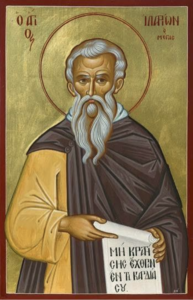
Saint Hilarion the Great was born in the year 292 in the village of Thabatha, near Gaza in Palestine. His parents were idolaters and sent him to Alexandria to receive an education. While studying there, Hilarion came to know Christianity and discovered the teachings of the Gospel. Hearing of the holy life of Saint Anthony the Great, he travelled into the desert to meet him. Deeply inspired by Saint Anthony’s life of prayer and solitude, Hilarion decided to follow the monastic path.
After spending time with Saint Anthony, Hilarion returned to Palestine and withdrew into the wilderness, where he devoted himself to prayer, fasting, and spiritual struggle. He lived in great poverty, enduring hunger, harsh conditions, and temptations from the devil. Through constant prayer and unwavering faith in Christ, he overcame these struggles and grew in holiness.
As word of his holy life spread, people began coming to him seeking healing, guidance, and blessings. Through the grace of God, Saint Hilarion performed many miracles, healing the sick, delivering those possessed by demons, and bringing comfort to those who suffered. His compassion extended to everyone who approached him, and many were drawn to the Christian faith through his example.
Although Saint Hilarion desired a life of silence and solitude, crowds continued to gather around him. Many disciples followed his example, and monastic communities began to flourish throughout Palestine. Yet the Saint remained humble, never seeking honour or recognition for the miracles God worked through him.
Longing for greater solitude, Hilarion eventually left Palestine and travelled through different regions, including Egypt, Sicily, and Dalmatia. Wherever he went, his holiness became known. In Dalmatia, he delivered a town from a terrifying beast and, through his prayers, calmed the sea when a great wave threatened the people. Despite these miracles, he continued seeking a quiet place where he could devote himself entirely to God.
Finally, Saint Hilarion settled on the island of Cyprus, where he lived in a remote and difficult-to-reach place. There, he spent his remaining years in prayer and solitude, accompanied by his faithful disciple Hesychius. When Saint Hilarion reached the age of eighty, he knew that his earthly life was coming to an end. As he prepared to depart, he encouraged his soul with words of faith, reminding himself that he had served Christ for nearly seventy years and had nothing to fear.
Saint Hilarion peacefully fell asleep in the Lord at the age of eighty. His disciples buried him, and later his faithful disciple Hesychius brought his holy body back to Palestine, where it was venerated by the faithful.