Daily Readings | November 9, 2026
Today’s Readings
- Gospel: Matthew 4:25; 5:1–12
- Epistle: St. Paul’s Letter to the Ephesians 5:8–19
- Saint of the Day: Venerable Matrona, Abbess of Constantinople
Epistle of the Day
St. Paul’s Letter to the Ephesians 5:8–19
Gospel of the Day
Matthew 4:25; 5:1–12
At that time, great crowds followed Jesus from Galilee and the Decapolis and Jerusalem and Judea and from beyond the Jordan. Seeing the crowds, He went up on the mountain, and when He sat down His disciples came to Him. And He opened His mouth and taught them, saying: “Blessed are the poor in spirit, for theirs is the kingdom of heaven. Blessed are those who mourn, for they shall be comforted. Blessed are the meek, for they shall inherit the earth. Blessed are those who hunger and thirst for righteousness, for they shall be satisfied. Blessed are the merciful, for they shall obtain mercy. Blessed are the pure in heart, for they shall see God. Blessed are the peacemakers, for they shall be called sons of God. Blessed are those who are persecuted for righteousness’ sake, for theirs is the kingdom of heaven. Blessed are you when men revile you and persecute you and utter all kinds of evil against you falsely on My account. Rejoice and be glad, for your reward is great in heaven.”
Gospel Reflection
In this Gospel, Jesus teaches the crowds through the Beatitudes, showing us what it means to live a life that is pleasing to God. He blesses those who are humble, those who mourn, and those who seek righteousness. Jesus reminds us that true happiness and spiritual fulfillment do not come from wealth, power, or worldly recognition, but from having a sincere heart and a close relationship with God. Those who recognize their need for Him and seek His guidance will find comfort, strength, and hope in His promises.
Jesus also teaches the importance of mercy, purity of heart, and making peace with others. He promises that those who show compassion will receive mercy, and those who seek peace will be called children of God. He also encourages those who suffer persecution for doing what is right, reminding them that their faithfulness will be rewarded in Heaven. Through these teachings, Christ shows us that living according to God’s will requires humility, patience, forgiveness, and love, even when we face difficulties.
The main message of this Gospel is that true blessedness comes from living according to Christ’s teachings and developing a heart filled with love, humility, and righteousness. Jesus calls us to care for others, seek peace, remain pure in our intentions, and stay faithful to Him through every challenge. The Beatitudes remind us that holiness is not measured by worldly success, but by how closely our lives reflect the love and goodness of God.
Saint of the Day
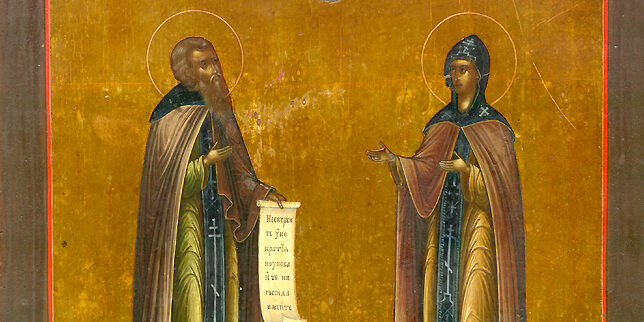
Venerable Matrona, Abbess of Constantinople
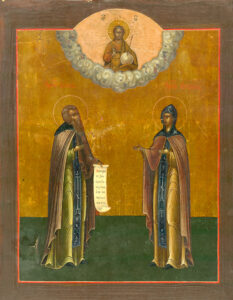 Saint Matrona was born in the fifth century in Perge, Asia Minor. She married a wealthy man named Dometian, and they had a daughter named Theodota before moving to Constantinople. From a young age, Matrona was deeply devoted to God and spent much of her time in church, praying and seeking repentance. There she met two holy women, Eugenia and Susanna, whose lives of fasting, prayer, and humility inspired her to pursue a deeper spiritual life.
Although her husband opposed her growing devotion to prayer and asceticism, Saint Matrona longed to dedicate her entire life to Christ. After praying for God’s guidance, she received a dream that she understood as a sign to enter a monastery. She entrusted her fifteen-year-old daughter to the care of Susanna, disguised herself as a man, and entered the monastery of Saint Bassion under the name Babylos.
At the monastery, Matrona lived quietly, devoting herself to prayer, fasting, obedience, and hard work. The monks admired her humility and dedication without knowing her true identity. Eventually, God revealed to Saint Bassion in a dream that Babylos was a woman. When questioned, Matrona explained her desire to serve God and the circumstances that had brought her there. Recognizing her sincere intentions, Saint Bassion sent her to a women’s monastery in Emesa.
Saint Matrona spent many years at the monastery, becoming an example of holiness and spiritual discipline to the sisters. After the abbess passed away, the nuns unanimously chose Matrona to lead them. Through her prayers and devotion, God granted her the gift of healing, and her reputation for holiness spread throughout the region.
When her husband learned of her whereabouts and sought to find her, Matrona departed and traveled to Jerusalem, Mount Sinai, and eventually Beirut. There, she settled in an abandoned pagan temple and continued her life of prayer. Many people came seeking her guidance, and through her teachings, numerous pagans were brought to the Christian faith. Women began gathering around her, and a new monastery was established.
Later, Saint Matrona returned to Constantinople after learning of her husband’s death. With the blessing of Saint Bassion, she founded another women’s monastery, which became known for its strict spiritual discipline, prayer, and virtuous way of life. The sisters from her monastery in Beirut eventually joined her there.
After seventy-five years of monastic life, Saint Matrona received a vision of Paradise and the place prepared for her in Heaven. At the age of one hundred, she blessed her spiritual daughters and peacefully fell asleep in the Lord. Her life reminds us that true devotion to God requires perseverance, humility, sacrifice, and unwavering faith.