Daily Readings | November 15, 2026
Today's Readings
- Epistle: ST. PAUL’S LETTER TO THE EPHESIANS 2:14–22
- Gospel: LUKE 10:25–37
- Saint of the Day: HOLY MARTYRS AND CONFESSORS GURIAS, SAMONAS, AND HABIBUS
- Fast: ABSTAIN FROM MEAT, DAIRY, EGGS
Epistle of the Day
Brethren, Christ is our peace, who has made us both one, and has broken down the dividing wall of hostility, by abolishing in his flesh the law of commandments and ordinances, that he might create in himself one new man in place of the two, so making peace, and might reconcile us both to God in one body through the cross, thereby bringing the hostility to an end. And he came and preached peace to you who were far off and peace to those who were near; for through him we both have access in one Spirit to the Father. So then you are no longer strangers and sojourners, but you are fellow citizens with the saints and members of the household of God, built upon the foundation of the apostles and prophets, Christ Jesus himself being the cornerstone, in whom the whole structure is joined together and grows into a holy temple in the Lord; in whom you also are built into it for a dwelling place of God in the Spirit.
Gospel of the Day
LUKE 10:25–37
At that time, a lawyer stood up to put Jesus to the test, saying, “Teacher, what shall I do to inherit eternal life?” He said to him, “What is written in the law? How do you read?” And he answered, “You shall love the Lord your God with all your heart, and with all your soul, and with all your strength, and with all your mind; and your neighbor as yourself.” And he said to him, “You have answered right; do this, and you will live.” But he, desiring to justify himself, said to Jesus, “And who is my neighbor?” Jesus replied, “A man was going down from Jerusalem to Jericho, and he fell among robbers, who stripped him and beat him, and departed, leaving him half dead. Now by chance a priest was going down that road; and when he saw him he passed by on the other side. So likewise a Levite, when he came to the place and saw him, passed by on the other side. But a Samaritan, as he journeyed, came to where he was; and when he saw him, he had compassion, and went to him and bound up his wounds, pouring on oil and wine; then he set him on his own beast and brought him to an inn, and took care of him. And the next day he took out two denarii and gave them to the innkeeper, saying, ‘Take care of him; and whatever more you spend, I will repay you when I come back.’ Which of these three, do you think, proved neighbor to the man who fell among the robbers?” He said, “The one who showed mercy on him.” And Jesus said to him, “Go and do likewise.
Gospel Reflection
In this Gospel, Jesus teaches us about the importance of loving God and showing compassion toward others through the Parable of the Good Samaritan. When a lawyer asks Jesus what he must do to inherit eternal life, Christ reminds him of the commandments to love God with all his heart and to love his neighbor as himself. When the lawyer asks who his neighbor is, Jesus tells the story of a man who was attacked by robbers and left badly injured. Although a priest and a Levite passed by without helping, a Samaritan stopped and cared for him. This teaches us that true love is demonstrated through our actions, not simply through our words or religious knowledge.
The Samaritan showed mercy to a stranger, even though Jews and Samaritans traditionally had disagreements and divisions between them. He treated the man’s wounds, brought him somewhere safe, and paid for his care without expecting anything in return. Through this example, Jesus reminds us that our neighbor is anyone who needs our love, kindness, and assistance, regardless of their background, beliefs, or circumstances. Christ calls us to look beyond differences and recognize the dignity of every person, showing the same compassion and mercy that God continually shows us.
The main message of this Gospel is that loving God means putting our faith into action by showing mercy and compassion toward others. Jesus calls us not to ignore those who are suffering, but to offer help whenever we can. Even small acts of generosity, forgiveness, and kindness can reflect Christ’s love. By following the example of the Good Samaritan, we learn to place the needs of others before our own comfort and to live according to God’s commandment of love.
Saint of the Day
The Holy Martyrs and Confessors Gurias, Samonas, and Habibus
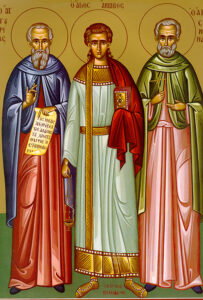 The Holy Martyrs and Confessors Gurias, Samonas, and Habibus lived during the early centuries of Christianity and suffered persecution for their unwavering faith in Jesus Christ. Saints Gurias and Samonas were devoted preachers of the Gospel in the city of Edessa during the reign of Emperors Diocletian and Maximian. Because they refused to worship pagan idols and openly confessed Christ as the one true God, they were arrested and subjected to severe punishment.
Despite enduring beatings, imprisonment, and cruel tortures, Saints Gurias and Samonas remained steadfast in their faith. They were suspended by their hands, burdened with heavy weights, and confined in harsh conditions. Throughout their suffering, they continued to pray, placing their trust in God’s mercy and protection. Saint Samonas offered a heartfelt prayer asking the Lord to strengthen them, preserve His commandments within their hearts, and make them worthy of His Heavenly Kingdom. Eventually, the two martyrs were taken outside the city at night and beheaded. Their bodies were reverently buried by fellow Christians.
Several years later, during the persecution under Emperor Licinius, Saint Habibus, a deacon of the Church of Edessa, was sought by the authorities because of his dedication to spreading Christianity. Rather than allowing others to suffer while searching for him, he willingly presented himself before those sent to arrest him. He boldly confessed his faith in Christ and was sentenced to be burned alive. Saint Habibus entered the flames with prayer and surrendered his soul to the Lord. When the fire died down, his family discovered that his body had remained unharmed, and they buried him beside Saints Gurias and Samonas.
After their martyrdom, many miracles were attributed to the prayers and intercessions of these three saints. One of the most well-known accounts concerns a young Christian woman named Euphemia, whose mother, Sophia, had entrusted her in marriage to a Gothic soldier. Before their marriage, the soldier promised at the tombs of the three martyrs that he would always love, protect, and respect Euphemia. However, when he returned to his homeland with her, she discovered that he already had another wife.
Euphemia was forced into servitude and endured terrible mistreatment. Her husband threatened her, and after she gave birth to a son, his first wife poisoned the child. In her suffering, Euphemia turned to Saints Gurias, Samonas, and Habibus, remembering that they had witnessed her husband’s promise. Through their miraculous intercessions, she was delivered from her suffering and returned safely to Edessa, where she was reunited with her mother.
When the Gothic soldier later returned to Edessa, Sophia revealed his cruelty and dishonesty to the authorities. The city prefect ordered his execution. Through this miracle, the three holy martyrs became especially honored as protectors of Christian marriage and defenders of those suffering injustice within their families.
The lives of Saints Gurias, Samonas, and Habibus remind us of the importance of faithfulness, courage, honesty, and trust in God’s protection. Their willingness to suffer rather than deny Christ teaches us to remain steadfast in our faith, while their miraculous help for Euphemia reminds us that God hears the prayers of those who suffer. The Orthodox Church continues to seek their intercessions for peace in families, healing in troubled marriages, and protection from injustice.
✦ This day also marks the beginning of the Nativity Fast, a 40-day period of spiritual preparation leading up to the birth of our Lord Jesus Christ. Through prayer, fasting, repentance, and acts of love, we are called to draw closer to God and prepare our hearts to welcome Him. This holy season reminds us that fasting is not only about abstaining from certain foods, but also about growing in humility, compassion, and faith as we prepare to celebrate the glorious Nativity of Christ.