Daily Readings | November 18, 2026
Today's Readings
- Epistle: ST. PAUL’S SECOND LETTER TO THE THESSALONIANS 2:1–12
- Gospel: LUKE 15:1–10
- Saint of the Day: Holy Martyr Platon of Ancyra
- Fast: ABSTAIN FROM MEAT, FISH, DAIRY, EGGS, WINE, OLIVE OIL
Epistle of the Day
Brethren, concerning the coming of our Lord Jesus Christ and our assembling to meet him, we beg you not to be quickly shaken in mind or excited, either by spirit or by word, or by letter purporting to be from us, to the effect that the day of the Lord has come. Let no one deceive you in any way; for that day will not come, unless the rebellion comes first, and the man of lawlessness is revealed, the son of perdition, who opposes and exalts himself against every so-called god or object of worship, so that he takes his seat in the temple of God, proclaiming himself to be God. Do you not remember that when I was still with you I told you this? And you know what is restraining him now so that he may be revealed in his time. For the mystery of lawlessness is already at work; only he who now restrains it will do so until he is out of the way. And then the lawless one will be revealed, and the Lord Jesus will slay him with the breath of his mouth and destroy him by his appearing and his coming. The coming of the lawless one by the activity of Satan will be with all power and with pretended signs and wonders, and with all wicked deception for those who are to perish, because they refused to love the truth and so be saved. Therefore God sends upon them a strong delusion, to make them believe what is false, so that all may be condemned who did not believe the truth but had pleasure in unrighteousness.
Gospel of the Day
LUKE 15:1–10
At that time, the tax collectors and sinners were all drawing near to Jesus to hear him. And the Pharisees and the scribes murmured, saying, “This man receives sinners and eats with them.” So he told them this parable: “What man of you, having a hundred sheep, if he has lost one of them, does not leave the ninety-nine in the wilderness, and go after the one which is lost, until he finds it? And when he has found it, he lays it on his shoulders, rejoicing. And when he comes home, he calls together his friends and his neighbors, saying to them, ‘Rejoice with me, for I have found my sheep which was lost.’ Just so, I tell you, there will be more joy in heaven over one sinner who repents than over ninety-nine righteous persons who need no repentance. “Or what woman, having ten silver coins, if she loses one coin, does not light a lamp and sweep the house and seek diligently until she finds it? And when she has found it, she calls together her friends and neighbors, saying, ‘Rejoice with me, for I have found the coin which I had lost.’ Just so, I tell you, there is joy before the angels of God over one sinner who repents.”
Gospel Reflection
In this Gospel, Jesus teaches us about God’s endless mercy and His desire to bring every sinner back to Him. When the Pharisees criticize Jesus for welcoming tax collectors and sinners, He responds with the Parable of the Lost Sheep. Just as a shepherd searches for one missing sheep, even though he still has ninety-nine others, God lovingly seeks those who have wandered away from Him. This reminds us that every person is precious in God’s eyes, and no one is forgotten or considered unworthy of His love and forgiveness.
Jesus then tells the Parable of the Lost Coin, describing a woman who carefully searches her home until she finds a missing coin. When she discovers it, she rejoices and invites others to share in her happiness. Through both parables, Christ reveals the great joy in Heaven when even one sinner repents and returns to God. Rather than condemning those who have fallen into sin, Jesus calls them toward repentance and spiritual healing. His love is patient, compassionate, and always ready to welcome those who sincerely seek His forgiveness.
The main message of this Gospel is that God never stops loving us or calling us back to Him, no matter how far we may have wandered. Jesus reminds us that repentance is not something to fear, but an opportunity to renew our relationship with God and experience His mercy. We are also called to imitate His compassion by welcoming others with kindness rather than judging them for their mistakes. Through prayer, humility, and sincere repentance, we can return to Christ, knowing that He rejoices whenever one of His children finds the way home.
Saint of the Day
Holy Martyr Platon of Ancyra
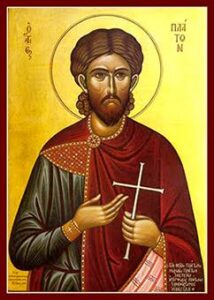 The Holy Martyr Platon was born in the city of Ancyra in Galatia and was the brother of Saint Antiochus the Physician. From a young age, he demonstrated a deep love for God and a remarkable understanding of both the Holy Scriptures and Greek philosophy. Rather than keeping his knowledge to himself, Saint Platon dedicated his youth to preaching the Gospel, traveling from city to city and encouraging others to abandon pagan worship and embrace the Christian faith. His wisdom, eloquence, and devotion to Christ inspired many who heard him speak.
Because of his missionary work, Saint Platon was eventually arrested and brought before the governor Agrippinus at the temple of Zeus. The governor initially attempted to persuade him to abandon Christianity through promises of honor and recognition. He suggested that Platon could become as highly regarded as the famous philosopher Plato if he agreed to worship the pagan gods. However, Saint Platon boldly declared that worldly wisdom is temporary and limited, while the wisdom found in the Gospel is eternal and without bounds.
When his attempts at persuasion failed, Agrippinus offered Saint Platon his beautiful niece in marriage, hoping that the promise of wealth and worldly happiness would convince him to deny Christ. At the same time, he threatened the saint with torture and death if he refused. Saint Platon remained unmoved, declaring that he would rather accept temporary suffering and death than lose the promise of eternal life with Christ. Angered by his unwavering faith, the governor ordered him to be severely beaten and imprisoned.
As Saint Platon was being led away to prison, he turned toward the people gathered near the temple and encouraged them to remain faithful to Christ and never abandon the Christian faith. Even while facing persecution, his concern was not for his own safety, but for the spiritual well-being of others. After seven days, he was brought before the governor once again, where instruments of torture had been prepared, including heated irons, sharp hooks, and boiling cauldrons.
Agrippinus offered Saint Platon one final opportunity to save himself by sacrificing to the pagan gods. However, the holy martyr refused to betray his faith, choosing to endure further suffering rather than deny the Lord. He was tortured and then returned to prison, where he was deprived of food and water for eighteen days. Despite the harsh conditions and physical suffering, Saint Platon remained steadfast, drawing strength from his trust in God.
When the authorities realized that neither torture nor imprisonment could weaken his faith, they offered him freedom on the condition that he simply declare, “Great is the god Apollo.” Even this small outward act of pagan worship was unacceptable to Saint Platon, who refused to compromise his devotion to Christ. Enraged by his determination, Governor Agrippinus ordered that he be executed by beheading. Saint Platon received the crown of martyrdom, remaining faithful to Christ until his final breath.
The life of Saint Platon reminds us that true wisdom is found in Christ and that our faith must remain stronger than worldly temptations, fear, or suffering. Although he was offered recognition, marriage, freedom, and the opportunity to escape death, he chose eternal life with God above every earthly reward. His courage teaches us to stand firmly in our beliefs, trust in God’s promises, and remain faithful even when following Christ requires sacrifice.