Daily Readings | November 17, 2026
Today's Readings
- Epistle: ST. PAUL’S FIRST LETTER TO THE CORINTHIANS 12:7–11
- Gospel: LUKE 14:25–35
- Saint of the Day: Saint Gregory the Wonderworker, Bishop of Neocaesarea
- Fast: ABSTAIN FROM MEAT, DAIRY, EGGS
Epistle of the Day
Brethren, to each is given the manifestation of the Spirit for the common good. To one is given through the Spirit the utterance of wisdom, and to another the utterance of knowledge according to the same Spirit, to another faith by the same Spirit, to another gifts of healing by the one Spirit, to another the working of miracles, to another prophecy, to another the ability to distinguish between spirits, to another various kinds of tongues, to another the interpretation of tongues. All these are inspired by one and the same Spirit, who apportions to each one individually as he wills.
Gospel of the Day
LUKE 14:25–35
At that time, great multitudes accompanied Jesus; and he turned and said to them, “If any one comes to me and does not hate his own father and mother and wife and children and brothers and sisters, yes, and even his own life, he cannot be my disciple. Whoever does not bear his own cross and come after me, cannot be my disciple. For which of you, desiring to build a tower, does not first sit down and count the cost, whether he has enough to complete it? Otherwise, when he has laid a foundation, and is not able to finish, all who see it begin to mock him, saying, ‘This man began to build, and was not able to finish.’ Or what king, going to encounter another king in war, will not sit down first and take counsel whether he is able with ten thousand to meet him who comes against him with twenty thousand? And if not, while the other is yet a great way off, he sends an embassy and asks terms of peace. So therefore, whoever of you does not renounce all that he has cannot be my disciple. Salt is good; but if salt has lost its taste, how shall its saltness be restored? It is fit neither for the land nor for the dunghill; men throw it away. He who has ears to hear, let him hear.
Gospel Reflection
In this Gospel, Jesus teaches that following Him requires complete dedication, sacrifice, and a willingness to place God above everything else. When Christ speaks about hating one’s family and even one’s own life, He is not commanding us to stop loving those closest to us. Rather, He is emphasizing that our love and loyalty to God must come before all earthly attachments. Jesus reminds us that being His disciple means carrying our own cross, accepting life’s difficulties with faith, and remaining committed to Him even when following His teachings becomes challenging.
Jesus then gives the examples of a man planning to build a tower and a king preparing for battle. Both must carefully consider what is required before beginning. Through these examples, Christ teaches us that discipleship is a lifelong commitment that requires perseverance, spiritual discipline, and sincere faith. We cannot follow Him only when life is comfortable or convenient. Instead, we must be willing to let go of anything that separates us from God, including pride, selfishness, and worldly desires. Jesus also compares His followers to salt, reminding us that our faith should remain strong and meaningful, bringing goodness and spiritual influence into the world.
The main message of this Gospel is that true discipleship means placing Christ at the center of our lives and remaining faithful to Him through every difficulty. Jesus calls us to examine our priorities and recognize that following Him requires more than words or outward religious practices. Through prayer, repentance, humility, and self-sacrifice, we learn to carry our crosses and grow closer to God. When we remain steadfast in our faith and live according to His commandments, we become examples of His love and truth to those around us.
Saint of the Day
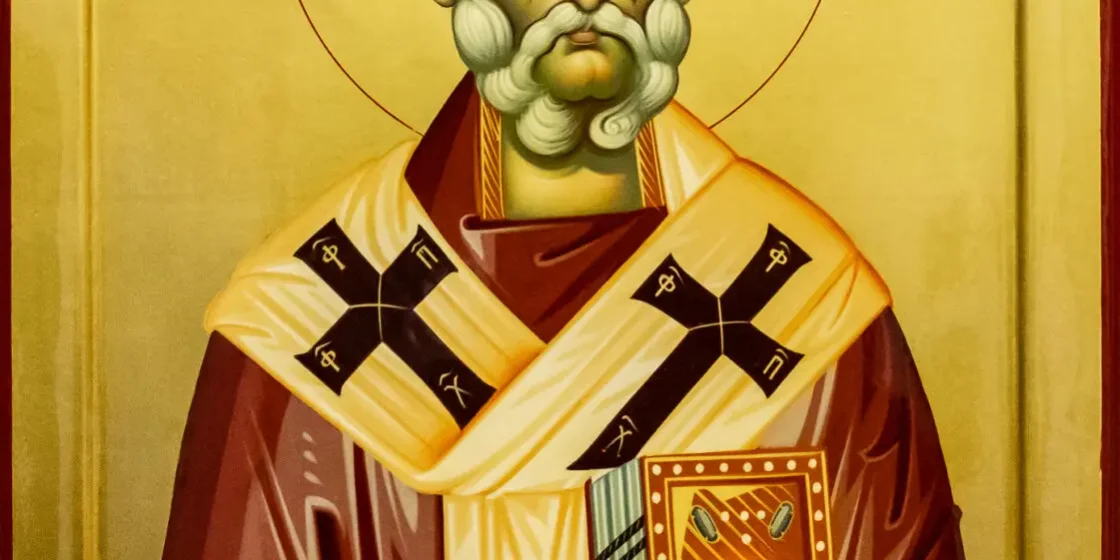
Saint Gregory the Wonderworker, Bishop of Neocaesarea
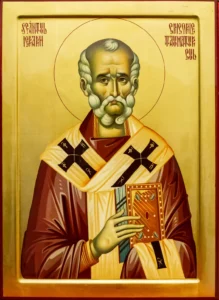 Saint Gregory the Wonderworker was born between the years 210 and 215 in Neocaesarea, a city in northern Asia Minor, into a prominent pagan family. Originally named Theodore, he received an excellent education and studied philosophy and law. Although he was familiar with the teachings of the great thinkers of his time, he found that worldly knowledge alone could not satisfy his desire for truth. Through his encounter with Christianity and the Holy Gospel, he discovered the truth he had been searching for and embraced the Christian faith.
Seeking a deeper understanding of God, Saint Gregory continued his studies under the renowned Christian teacher Origen in Alexandria. For eight years, he studied the Holy Scriptures and Christian theology, eventually receiving Holy Baptism. His growing faith transformed his life, leading him toward prayer, fasting, purity, and humility. During this period, he was falsely accused of committing a sinful act by a woman who sought to disgrace him. Rather than responding with anger, Gregory remained gentle. When the woman suddenly became afflicted by a demonic spirit, he prayed for her healing, and she was delivered. This became the first of the many miracles attributed to him.
After returning to Neocaesarea, Saint Gregory withdrew into the wilderness, desiring to dedicate his life entirely to God. Through fasting, prayer, and spiritual discipline, he grew in holiness and received the gifts of prophecy and spiritual discernment. Although he wished to remain in solitude, God had prepared him for a greater mission. Bishop Phaidemos of Amaseia recognized his holiness and sought to appoint him Bishop of Neocaesarea. Gregory initially hid himself out of humility, but eventually accepted the responsibility as God’s will.
During a time when false teachings about the Holy Trinity were spreading, Saint Gregory prayed earnestly for divine guidance. According to Church tradition, the Most Holy Theotokos appeared to him together with Saint John the Theologian, who instructed him in the true teaching of the Holy Trinity. Saint Gregory recorded what had been revealed to him, producing a confession of faith that became an important witness to Orthodox Trinitarian theology. His teachings were later honored by great Church Fathers, including Saint Basil the Great, Saint Gregory the Theologian, and Saint Gregory of Nyssa.
As Bishop of Neocaesarea, Saint Gregory devoted himself to preaching the Gospel, healing the sick, helping those in need, and bringing people to Christ. His powerful prayers were accompanied by extraordinary miracles. On one occasion, he settled a bitter dispute between two brothers who were fighting over a lake they had inherited. After spending the night in prayer, the lake miraculously disappeared, leaving behind a stream that marked the boundary between their properties. On another occasion, while a church was being built, he commanded a hill to move so that space could be made for its foundation.
During the persecution of Christians under Emperor Decius, Saint Gregory led his people into the mountains to protect them from arrest. When soldiers were sent to capture them, the saint and his deacon stood in prayer with their hands raised toward heaven. Through God’s miraculous protection, the soldiers were unable to see them, even though they passed nearby several times. The soldiers later reported seeing only two trees standing together. When the man who had betrayed their hiding place learned of this miracle, he repented and became a Christian.
After the persecution ended, Saint Gregory returned to Neocaesarea and continued guiding his flock. He encouraged the faithful to honor the martyrs who had suffered for Christ and strengthened the Church through his preaching, prayers, and miracles. His ministry brought about an extraordinary transformation in the city. When he first became bishop, there were only seventeen Christians in Neocaesarea, but by the end of his life, only seventeen pagans remained. Through his faithfulness and the grace of God, countless people came to believe in Christ.
The life of Saint Gregory the Wonderworker reminds us that true wisdom comes from God and that faith, prayer, and humility can transform both our lives and the lives of those around us. His miracles reveal the power of God’s grace, while his dedication to teaching and serving others encourages us to use the gifts we have received for the glory of God. His example teaches us to remain faithful, trust in God’s guidance, and seek spiritual growth through sincere prayer and devotion.